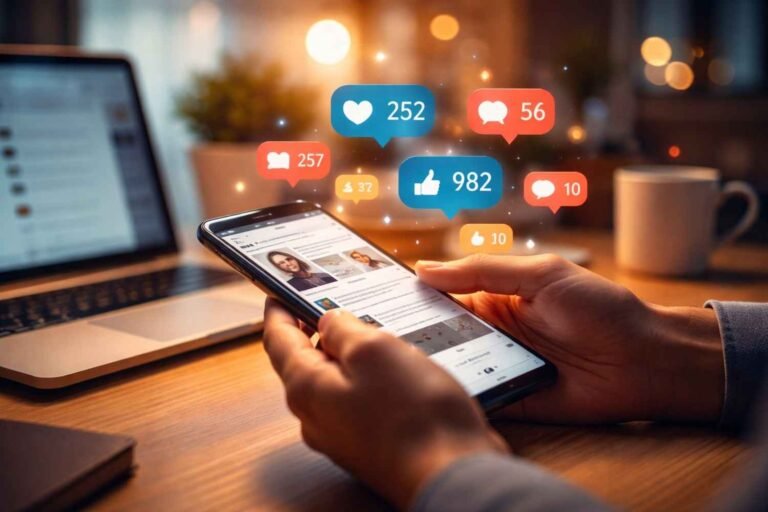


I remember a time when a post hitting a few thousand likes felt like a clear win. It looked good, it felt good, and on the surface, it meant people cared. But over time, something didn’t add up. High engagement didn’t always translate into website visits, sign-ups, or even meaningful conversations. That’s when the realization hit that likes and shares were only telling part of the story.
If you’ve been creating content consistently, you’ve probably seen this too. Some posts quietly drive real results without going “viral,” while others perform well publicly but lead nowhere. That gap is where audience behavior on social media becomes far more interesting and far more valuable.
Why Likes and Shares Don’t Tell the Full Story

Likes and shares are easy to measure, but they’re also easy to misunderstand. They often reflect instant reactions, not long-term interest or intent. Someone might like a post while scrolling, but that doesn’t mean they remember your brand five minutes later.
Real audience behaviour lives deeper. It shows up in how people:
- Spend time with your content
- Return to it later
- Take action beyond the platform
This is where most brands stop short. They optimize for visibility instead of understanding actual behavior patterns.
The Shift Toward Intent-Driven Metrics

Once you start paying attention, you’ll notice a different layer of engagement, one that signals genuine interest rather than passive interaction.
What Real Interest Looks Like
Instead of focusing only on surface metrics, stronger signals include:
- Saves and bookmarks → People want to come back later
- Click-through rate (CTR) → They’re curious enough to explore further
- Watch time and completion rate → Your content is holding attention
- Direct messages → They’re ready to start a conversation
These actions indicate something important: the audience isn’t just consuming content, they’re considering it.
This is where audience behavior on social media starts connecting directly to business outcomes.
Passive vs Active Engagement: A Crucial Difference

Not all engagement is equal, and this is where things get interesting.
Passive engagement is quick and effortless. Active engagement requires intent.
Passive Engagement
- Likes
- Quick reactions
- Brief views
Active Engagement
- Comments with substance
- Shares with context
- Saves and repeat views
- Link clicks
Most content strategies overvalue passive engagement because it’s visible. But active engagement is what actually builds connection and trust.
The Role of Attention: Dwell Time and Content Consumption
One of the most overlooked signals is how long someone stays with your content.
Short attention spans are often blamed for poor performance, but that’s only part of the story. If people are dropping off quickly, it usually means:
- The hook didn’t land
- The content didn’t match expectations
- The value wasn’t clear fast enough
On the other hand, high watch time or longer dwell time signals strong alignment between content and audience interest.
This is where you start understanding content consumption habits, not just engagement numbers.
Emotional Signals and Brand Perception

Numbers alone don’t tell you how people feel about your brand. That’s where qualitative insights come in.
Audience behavior on social media also includes:
- Sentiment behind comments and mentions
- Tone of conversations around your content
- User-generated content and organic tagging
When people voluntarily include your brand in their own content, it reflects something deeper than engagement; it reflects trust.
Another important layer is share of voice. If your brand is being talked about consistently within your niche, it indicates relevance of social media trends and positioning, not just reach.
Silent Audiences: The People You Don’t See

One of the biggest misconceptions is assuming that only visible engagement matters.
In reality, a large portion of your audience:
- Watches regularly
- Never comments
- Rarely likes
- Still converts later
These “silent users” are often your most valuable audience segment. They observe, evaluate, and act quietly.
Ignoring them means missing a huge part of audience behavior on social media.
Connecting Behavior to Real Outcomes
At some point, all of this needs to tie back to results.
The strongest indicator of meaningful audience behavior is action beyond the platform.
Metrics That Actually Reflect Impact
- Conversion rate
- Referral traffic quality
- Assisted conversions over time
- Return on ad spend (for paid efforts)
When someone moves from viewing content to taking action, that’s when social media starts functioning as a real growth channel, not just a visibility tool.
Where Most Strategies Go Wrong
A common mistake is optimizing content for what performs publicly instead of what performs privately.
This leads to:
- Chasing trends without purpose
- Prioritizing reach over relevance
- Ignoring deeper behavioral signals
The better approach is slower but more effective. It involves observing patterns, testing consistently, and adjusting based on how your audience actually behaves, not just how they react.
FAQs: Understanding Audience Behavior on Social Media Beyond Likes and Shares
1. What is audience behavior on social media?
Audience behavior on social media refers to how users interact with content, including actions like watching, saving, clicking, sharing, or converting beyond the platform.
2. Why are likes and shares considered vanity metrics?
They are considered vanity metrics because they reflect surface-level engagement and don’t always indicate genuine interest, intent, or business impact.
3. What metrics matter more than likes?
Metrics like click-through rate, watch time, saves, conversions, and direct messages provide deeper insight into audience intent and engagement quality.
4. How can brands better understand audience behavior?
By analyzing both quantitative data (analytics) and qualitative signals (comments, sentiment, user-generated content), and focusing on patterns over time.
Final Thoughts
Understanding audience behavior on social media changes how you look at content entirely. It forces you to move beyond surface-level validation and pay attention to what people actually do, not just what they tap on. Over time, you start noticing patterns what keeps attention, what builds trust, and what drives action. That’s where real growth comes from.
Likes might start the story, but behavior is what finishes it.