
When I first tried a ppc campaign setup for beginners, I made the classic mistake—launching ads without a clear structure.
I wasted my budget fast. No tracking. Poor keywords. Random targeting.If you’re here, you probably want one thing: Run ads that actually convert without burning money
In this guide, I’ll show you exactly how I set up campaigns today—simple, structured, and built for results.
Key Takeaways
- Start with a clear goal before launching any campaign
- Keyword research drives most of your success
- Campaign structure impacts performance more than budget
- Tracking is essential from day one
- Optimization is what turns average campaigns into profitable ones
What Is PPC Campaign Setup for Beginners (Simple Explanation)
Here is the simplest way I explain PPC: You pay for clicks. Some users convert. You make profit. But that only works if your system is built correctly.
A proper PPC campaign includes targeting, messaging, landing pages, and tracking. If one piece is weak, the whole system suffers.
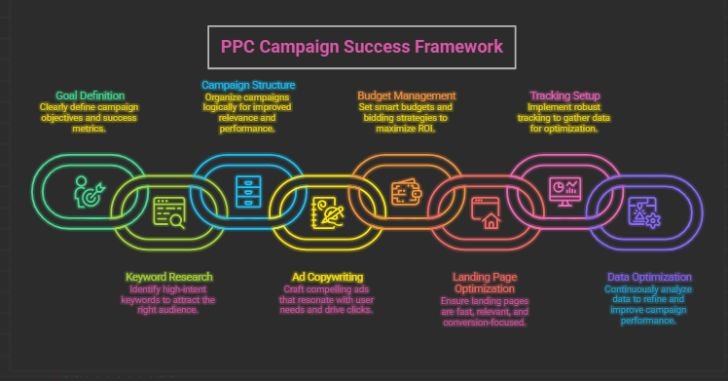
Step 1: Define Your Goal Before Spending Money
This is where most beginners go wrong.
Before I launch any campaign, I define:
- What action do I want? (leads or sales)
- What is my target cost per conversion?
- What defines success?
Without this clarity, your campaign has no direction.
Step 2: Keyword Research (Where Most Results Come From)
Keyword research is not optional. It is everything.
I focus on intent-based keywords:
- High buying intent keywords
- Problem-solving searches
- Commercial keywords
If you’re unsure how to do this properly, read this:how to find ppc keywords
That one step can completely change your results.
Step 3: Build a Clean Campaign Structure
A messy campaign leads to poor results.
Here’s how I structure campaigns:
- Campaign → based on goal
- Ad Groups → based on keyword themes
- Ads → tightly matched to keywords
This structure improves relevance, which improves performance.
Step 4: Write Ads That Actually Get Clicks
Most ads fail because they are too generic.
I always:
- Include the keyword in the headline
- Speak directly to the user’s problem
- Add a clear benefit or urgency
Your ad should answer one question instantly:
Why should I click this?
Step 5: Set Budget & Bidding Smartly
Don’t overspend early.
I start small and scale based on data.
- Controlled daily budget
- Focus on conversions, not clicks
- Monitor CPC closely
If your costs feel high, this will help: reduce ppc cost without losing traffic
Step 6: Landing Page Optimization (Most Ignored Step)
Your ads don’t convert. Your landing page does.
I make sure:
- Headline matches the ad
- CTA is clear and visible
- Page loads fast
- No distractions
Even a great ad cannot fix a bad landing page.
Step 7: Tracking Setup (This Changes Everything)
If you’re not tracking, you are guessing.
I always set up:
- Conversion tracking
- Analytics
- Click data
If you don’t know how, start here: ppc conversion tracking setup guide
Without tracking, optimization is impossible.
Step 8: Optimize Based on Data
Once your campaign is live, the real work begins.
I track:
- Click-through rate
- Conversion rate
- Cost per conversion
Then I adjust:
- Pause poor-performing keywords
- Improve ads
- Adjust bids
This is where campaigns become profitable.
Biggest Mistakes Beginners Make
I made all of these early on:
- No keyword strategy
- Skipping tracking
- Sending traffic to homepage
- Targeting too broadly
- Not testing ads
Avoid these and you will already outperform most beginners.
How Long Does It Take to See Results?
From my experience:
- First week: data collection
- Weeks 2–3: optimization
- Month 1–2: stable performance
PPC is fast, but it still needs refinement.
What Actually Makes PPC Work Long-Term
This is something most blogs don’t talk about.The difference between average and high-performing campaigns is not set up.It’s consistent.
The more you test, optimize, and refine, the better your results become. PPC rewards people who treat it like a system, not a one-time task.
Frequently Asked Questions
1. Is PPC good for beginners?
Yes, PPC is beginner-friendly if you follow a structured process. Start small, focus on learning data, and avoid scaling too fast. Many beginners lose money simply because they rush the process.
2. How much budget do I need to start?
You can start with a small daily budget. The key is not the amount, but how efficiently you use it. Even a low budget can generate results if your targeting and tracking are correct.
3. Which platform is best for beginners?
Google Ads is the best starting point because of its reach and intent-based targeting. It allows you to capture users who are already searching for solutions.
4. Can I run PPC without experience?
Yes, but you need to learn basic structure, keyword research, and tracking. Without these, you risk wasting money. Starting with a guided approach like this one helps reduce that risk significantly.
A Smarter Way to Build Profitable PPC Campaigns
When I first approached the ppc campaign setup for beginners, I focused on launching quickly.
Now, I focus on building correctly. That shift made all the difference. If you follow this process—clear goals, strong keywords, structured campaigns, and proper tracking—you won’t just run ads.
You’ll build a system that generates consistent results.